Would you love to be part of the Epiacum Heritage team but live too far away?
Fear not, here’s how you can help Epiacum Heritage and be involved at a very real level no matter where you live. Distance is no object to being part of our team.
We are building a virtual team who will be central to the projects and will be on the inside when it come to communications, information and involvement.
Become a virtual member of the Epiacum Volunteers Team
Whilst we are building a team of awesome volunteers to be involved in the archaeology at Epiacum, we need virtual help too. We need people who can help us with:
Writing (blogs, articles, promotions, adverts)
Design (graphics, infographics, images etc.)
Finding potential sponsors and partners online
Getting information online for our activities
Fund raising
Communications and newsletters
and so much more
Be a virtual member of the 2nd Nervian
As a virtual member of the 2nd Nervians you will have insider only access to the discussions, volunteer only information and access to reports, photographs and videos not available to the general public about the archaeology of this site and region.
Don’t wait – sign up today before all the volunteer places are taken
So what are you waiting for? The Roman’s didn’t let distance get in the way of their ambitions and you don’t need to either…
If fancy being part of something amazing and creating a memory to last a lifetime at a unique event with a bunch of amazing people… then this could be your time…
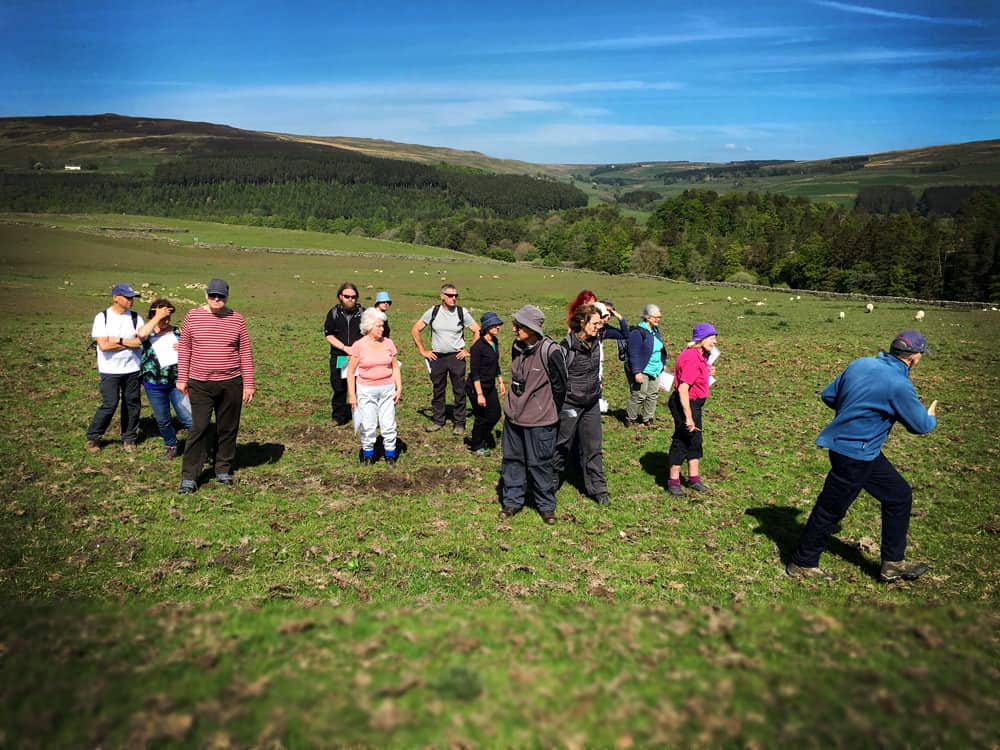
Epiacum Heritage (a charity) is holding a two week long event / project in the beautiful hills near Alston in Cumbria. The project is being led by us in conjunction with archaeologist Al Oswald, other team members and specialists and volunteers.
Epiacum Heritage is a charity set up to preserve, promote and learn (through responsible archaeology) about the unique Roman fort at Epiacum. We need to feed approximately 30 people a day for two weeks in September (2nd – 14th Sept 2018) at base camp.
The aim is to have a vibrant camp with musicians, story tellers and so on. If you are looking for a challenge, and an experience / memory to last a lifetime at this unique event and site, with a bunch of amazing people… then this could be your moment…
How long can I come for?
Volunteer for a day, a week or all 2 weeks to help provide sustenance for the team. Be part of the team. Be part of something special in the beauty of this amazing landscape.
When is it?
2nd – 14th September 2018 – just let us know when you want to come
Spaces limited
Once the team is complete – that’s it, the door closes on this brilliant experience. Get your name in asap.
Let us know you are interested as soon as possible so you don’t miss out
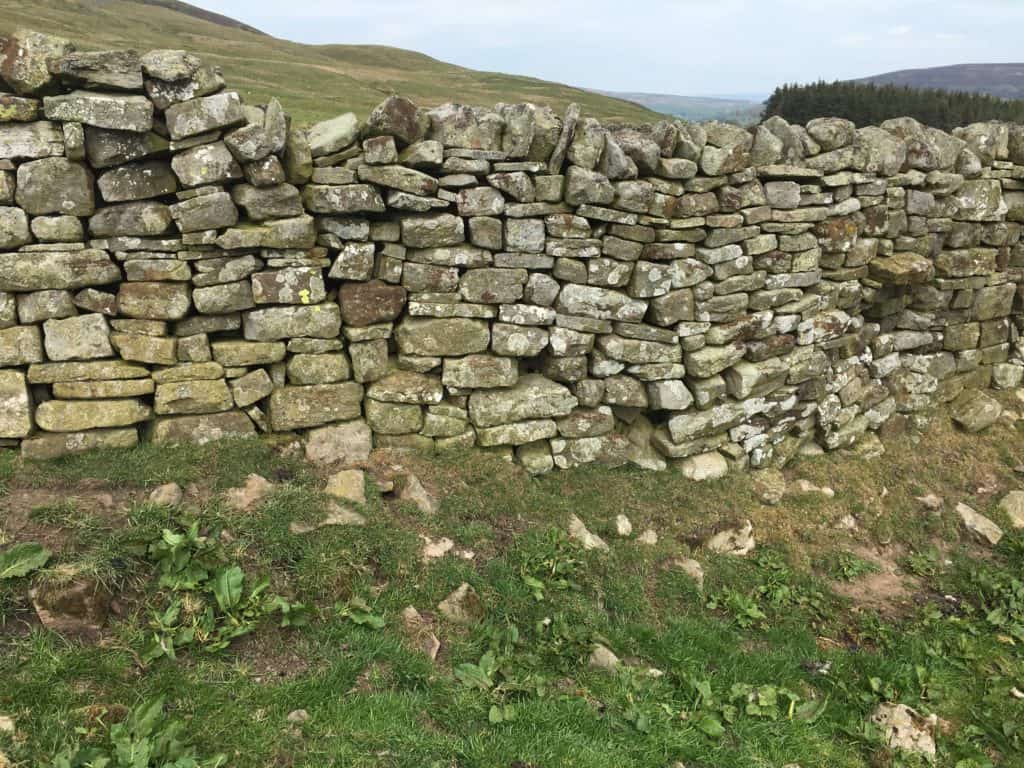
This September a team of volunteers led by archaeologist Al Oswald are going to be helping to record and dismantle the dry stone wall that was erected in 1843 across the middle of Epiacum Roman fort. This is no normal dry stone wall though. Many of the stones used to construct the wall by the victorians came from the Roman fort.
We have already identified a base of a Roman column and other architectural features embedded in the wall.
You could be part of an amazing team of volunteers and part of the next stage in the history of this astonishing site.
Working with the team you could be helping:
by handling 2000 year old parts of a Roman fort
helping with the PR and recording
helping in the camp
helping with social media / photography / blogging etc.
helping with general management or security
helping beforehand from the comfort of your own home by helping us plan and get sponsors
We need your help this September (or before if you can)
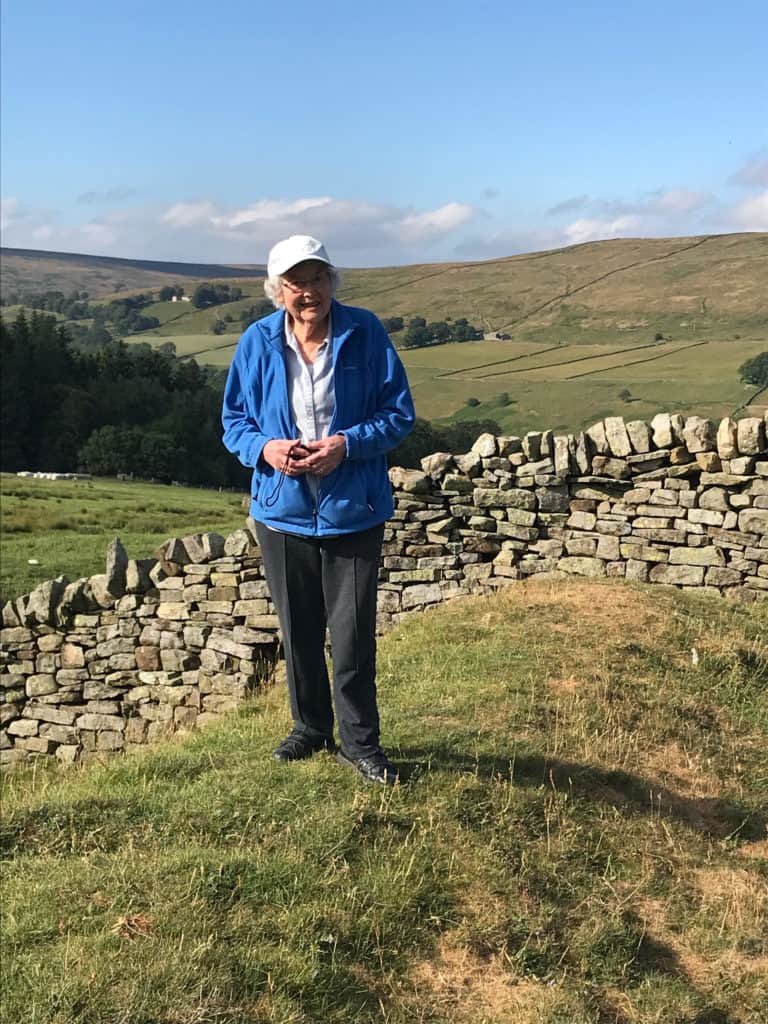
Jean Lunn is a great friend and supporter of Epiacum. As one of the team who took part in the only official excavation to have taken place within the fort itself in 1957-59, she has followed our progress with great interest and helped us greatly with her knowledge of those excavations and her continued support. Here she reports on her latest visit to the fort.
Jean on her perfect summer’s evening
What is an ‘Argo cat’? clues: it’s not feline, it’s definitely not soft and furry and to enjoy being in it you need a cushion or two – OK I’ll explain. It is an all-terrain small vehicle, and this week I was taken in one on to the top of the grassy knoll on which stands Epiacum Roman Fort near Alston (formerly known as Whitley Castle.)
Elaine Edgar of Epiacum Heritage very kindly offered me the chance to revisit the fort many years after I took part in the only official excavation on the site in 1957-9. Hence my need for help to reach the top. Until she suggested the trip I had given up all hope of ever seeing it again and I am extremely grateful to her and her son Ian, for giving me the opportunity to do so.
It was on a perfect summer’s evening – the views were wonderful but owing to the drought, the huge brown areas of pastures and fell had me worried – though on the fort they highlighted the tops of walls and stony areas of the remains. We wandered slowly around – examined the small annexe to the headquarters building near which my brother David found a lump of lead ore many years ago – its presence a reminder of the reason that the fort was built in the first place – to guard the mineral deposits and the Maiden Way, the Roman road over the shoulder of Cross Fell which runs from Carvoran on the Roman wall to Kirby Thore, in the Vale of Eden.
We then set off towards the south east corner and through a gate onto the site of the corner tower. A sentry up there would have had a remarkably clear view of any enemy trying to approach the ramparts. I imagined the cavalry barrack blocks to the north where men and horses shared the same living space and the infantry blocks to the south, the headquarters building and the commandant’s house – and the various sites of the bath houses.
Below the deeply incised trenches and ridges of the ramparts to the south was an area which archaeologists have now confirmed as the parade ground along with the podium from which the commanding officer took the salute, now a brown patch among the rushes. Imagine all the infantrymen and cavalrymen lined up with their weapons, trumpets and flags flying – the horses restless and their riders trying hard to keep them in order. What a spectacular sight!
Then of course, close by there were the small dwellings of the civilians and possibly the soldiers’ families and all those drawn to the safety of being near the fort, with their small patches of gardens and many small lanes running between and linking them – all revealed by the use of Lidar and other surveying techniques in recent times. I expect there were traders and small workshops and food stalls and all the usual buildings required to meet their needs. It would be a busy place and all suitable parts around the base of the ramparts would be used.
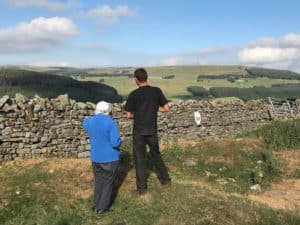
Jean and Ian check out the problematic field wall
There is now a plan afoot to remove the drystone walls, built in the 1800s at the time of the enclosures, which run across the fort and which are a hindrance to both the archaeologists and public alike – I am happy to be supporting this effort which will be quite a costly undertaking as each stone has to be examined by an archaeologist and moved by hand with care and transported off the fort in wheel barrows. But who knows how many Roman stones will be found? What a treasure. Following in the BBC tradition, time to do the job will be strictly limited to a fortnight in September coming. Could you contribute? Every little helps.
On my return to the farm Ian pointed out the likely site of the fort’s Temple to Mithras (the special god of the military) which reminded me that Noel Shaw, who led the excavation in the 1950s, found the Mithras Temple at Carrawburgh near the Roman Wall after a particularly dry summer when the parched turf drew back over the tops of its three altars. I wonder if Epiacum will yield any of its secrets in 2018? – I do hope so.
I continue to marvel at the advanced technology that the Romans brought to our isolated upland area and grieve a little at the terrible waste of talent when they left.
You know that feeling when there is a wall in your way and there is no way to ignore it?
A wall that stops you from doing something?
We have such a wall. Like a real wall. A real dry stone wall.
You see we have a roman fort that was built it the wilds of what is now the border between Northumberland and Cumbria. The fort was built around 122 AD. It is unique. No other roman fort was ever constructed like this, which is highly unusual given the roman love of standardisation. So from an archaeological point of view, Epiacum is a highly prized and valued site.
Then later in history a series of enclosure acts from 1845 onwards created rights to own land if that land was enclosed in some way. In the case of much of this area the answer was to build dry stone walls to claim rights to land to be farmed. As a result a lot of dry stone walls were constructed over a very short period of time. One such wall just happened to go right across the middle of Epiacum roman fort.
The first problem is that when people visit the site these days they can’t see the fort in it’s entirety as the wall gets in the way.
The second issue is that people have to walk around the wall and climb back onto the fort to see the other half of it and this is damaging the impressive ramparts that have, until now) stood the test of time. However, some people don’t walk around and clamber over the wall! Apart from the very present danger of injury doing this it damages both the wall and the site as the stones fall.
The site is so important that it is a scheduled site and therefore protected by law. But we have permission the remove most of the wall.
There are a couple of problems with this:
Firstly some of the stones in the wall are actually from the fort and we need the help of expert archaeologists to help identify these stones to both preserve them and learn what we can about the construction of this unique building.
Secondly each meter of the wall weighs a ton…. and we can’t use heavy lifting gear as the sort of vehicles needed for the job would damage the fort. So the job has to be done by hand. Stone by stone.
This all costs. We need equipment, volunteers and we need to feed and house the volunteers whilst this work is done.