Epiacum Operation Jericho Diary #4 — The Wall Comes Down, The Wall Goes Up, The Master Returns, and Rain Stops Play
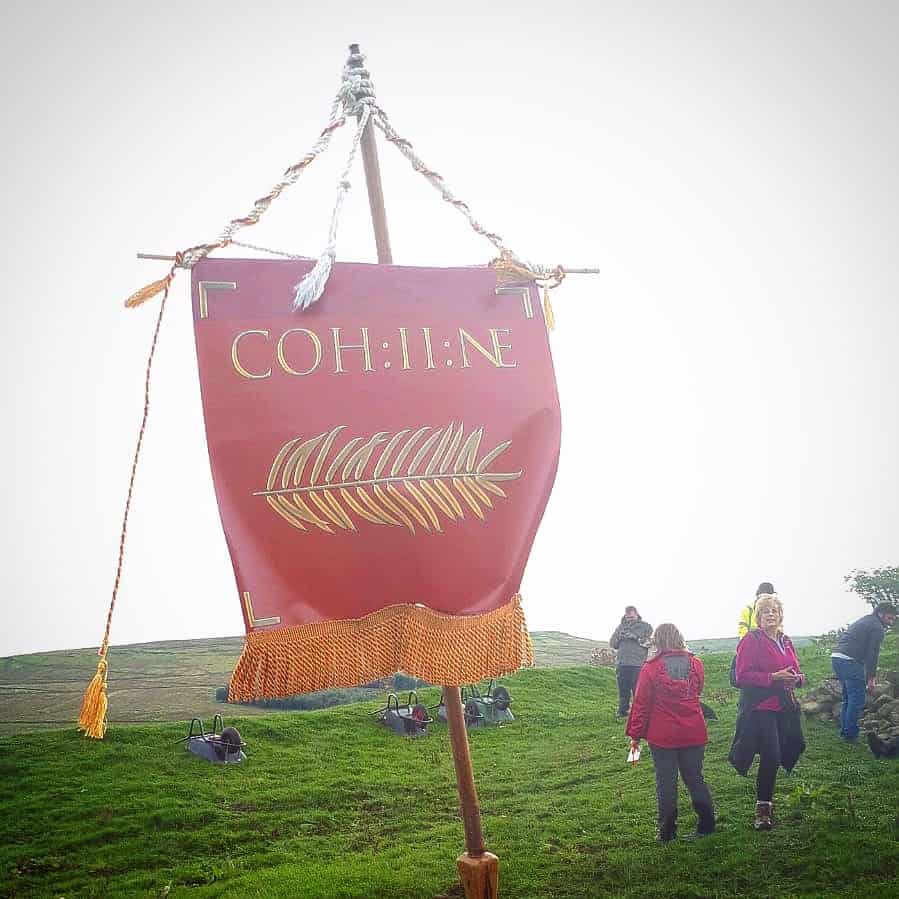
Well, where do I start?  So much to tell you!  When the last Diary went out, we had completed about half of the wall removal.  And Oh!  The finds!  Some amazing pieces of stone and other items will keep our Finds Gurus busy for quite some time.  Our Chair, Dave Wilkinson, has been posting a mostly-daily blog, detailing all the finds, which you can read all about on the Blog page at the Epiacum website (https://epiacumheritage.org/blog/)

So — the wall comes down.  Now we are about 3/4 of the way done, as per the plan:
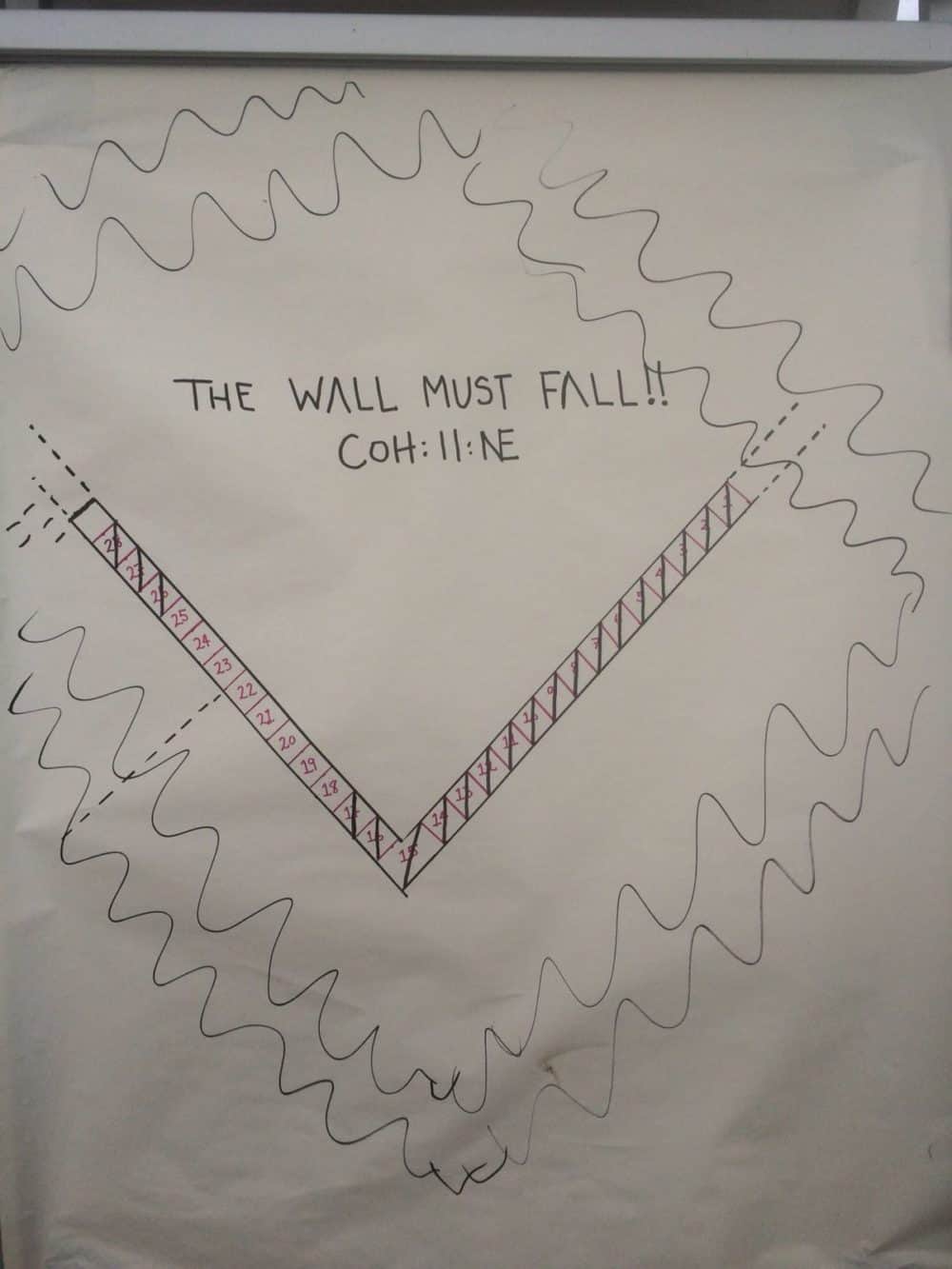
Not too shabby, eh?  Nice to be ahead of schedule.
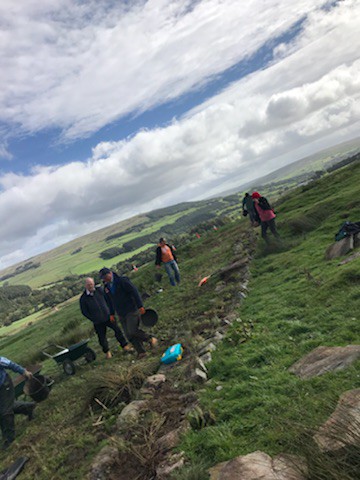
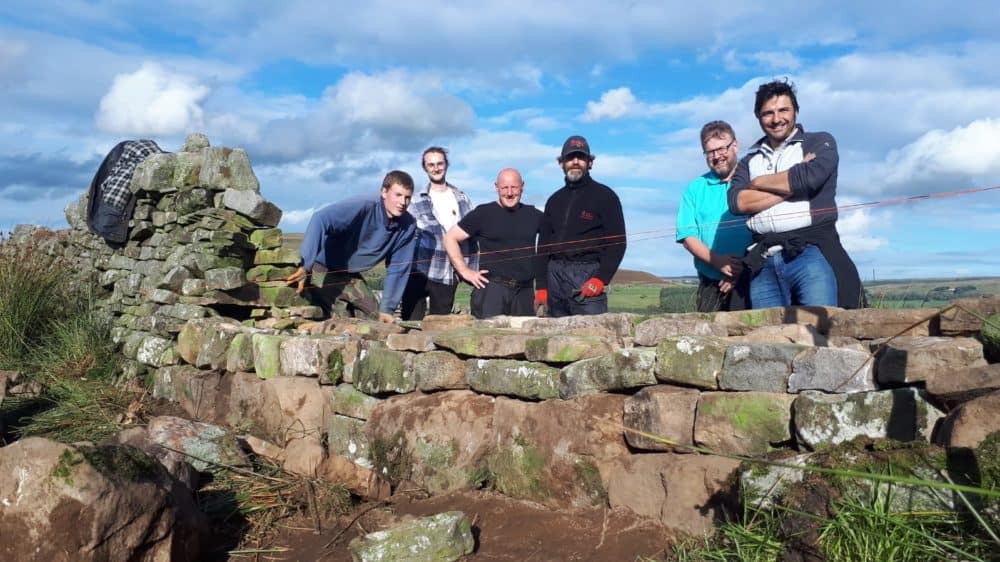
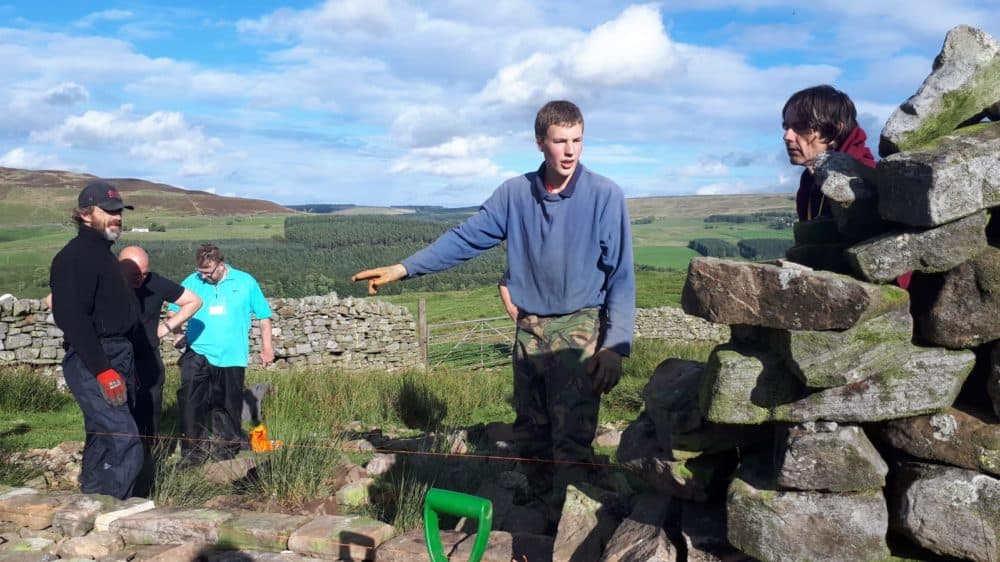
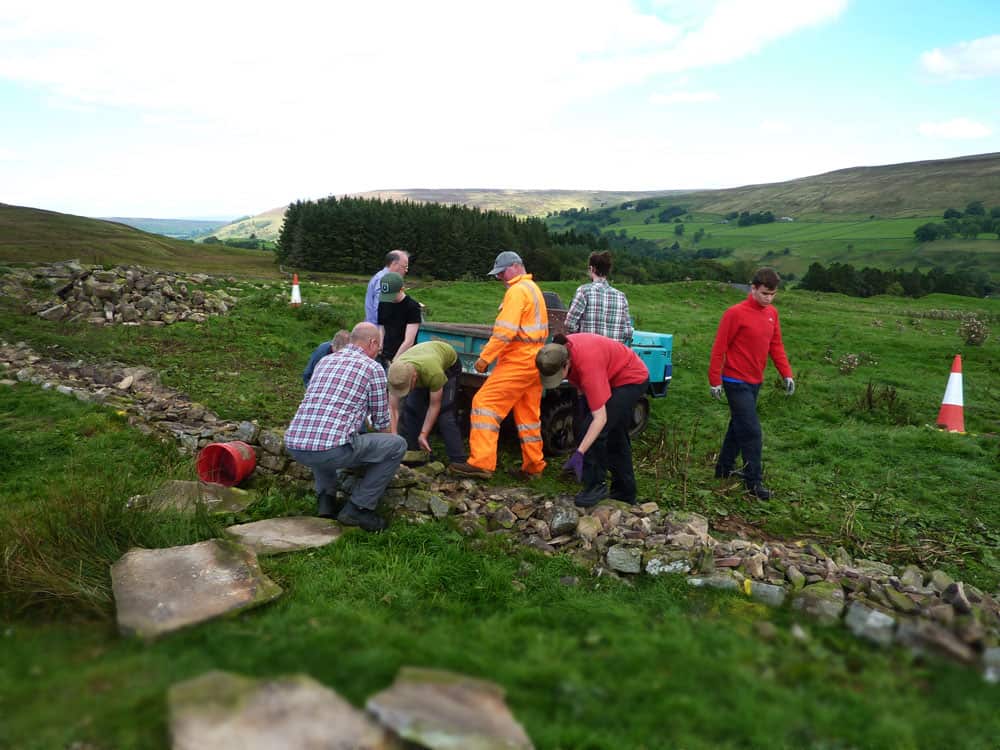
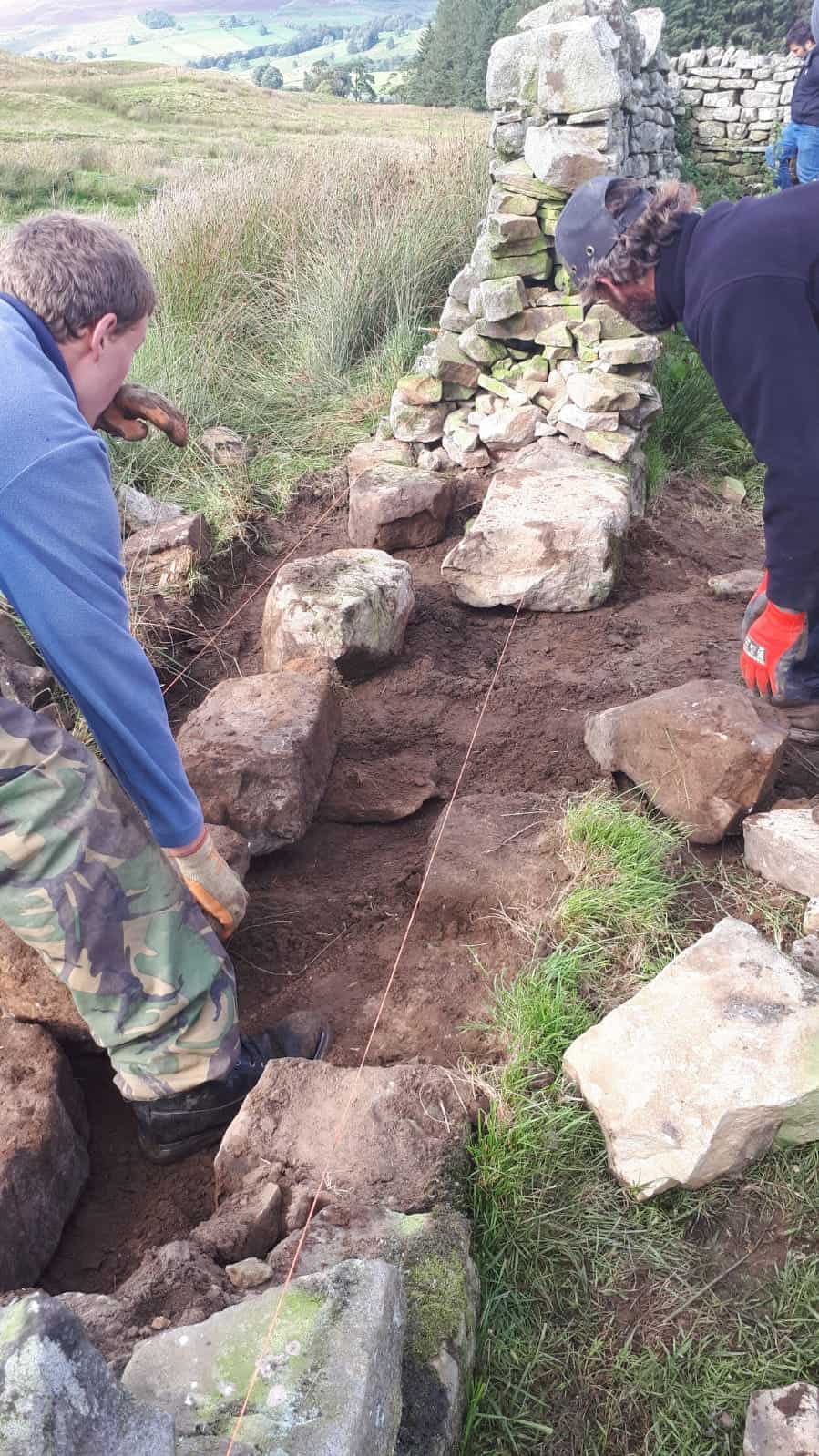
But the wall coming down isn’t the only event happening at Epiacum right now, no siree — we also have a wall going UP!  All the Roman and medieval stones have been set aside for a more thorough evaluation; the rest have been returned to the farmer.  Since we have so many willing hands on site, the Edgars have taken advantage and have asked the team to make some repairs.   Wall going up looks very similar to wall coming down — but with a straight edge-string for guidance!
The other Really Big Thing this past weekend was the return of the Master — Professor Stewart Ainsworth not only came back to check on our progress, he also completed his most recent course at Epiacum!  He and his students visited 9 local sites in an advanced Landscape Archaeology-type training session, and the 9th site was right here.  It’s a natural sequel to his Intro to Landscape Archaeology Masterclass, which was held at Epiacum last May.  For those of you who have ever wanted to learn more about “reading” the landscape and practice non-destructive archaeology, this Intro weekend class is ideal.  Stewart takes you all over the fort (better keep your gym membership up!) and shows you the history of the site — bronze age, Roman, medieval, and modern — all without turning over a single blade of grass or clump of dirt.  It’s truly amazing what can be seen just by knowing where and how to look.
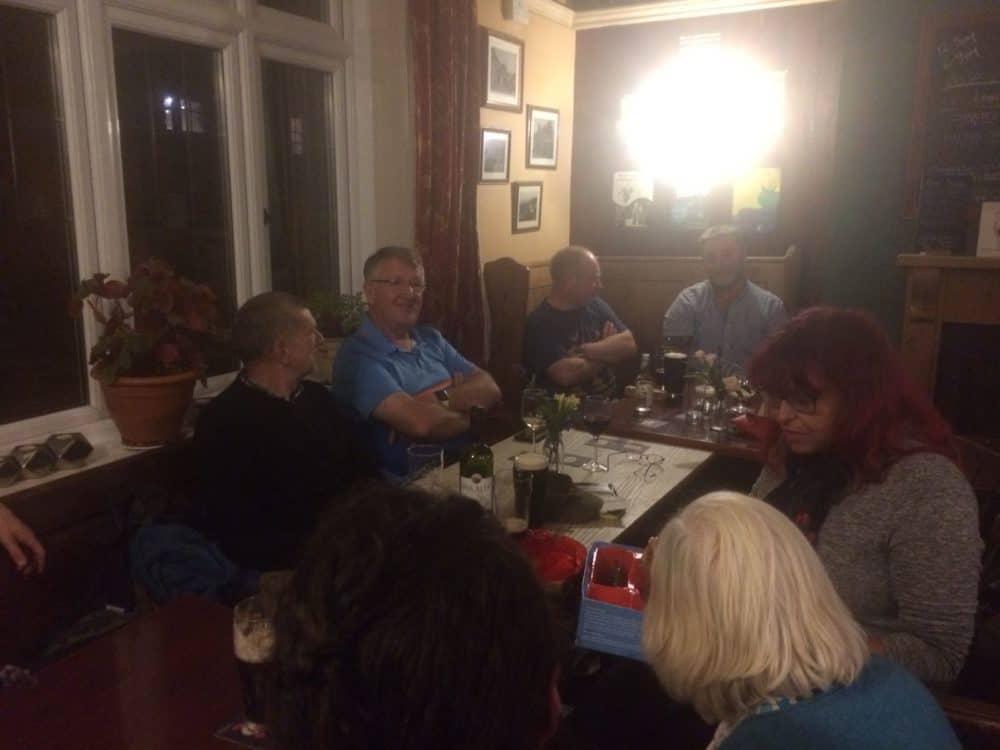
Stewart’s students and the Second Nervians all met in the pub — but you knew that!

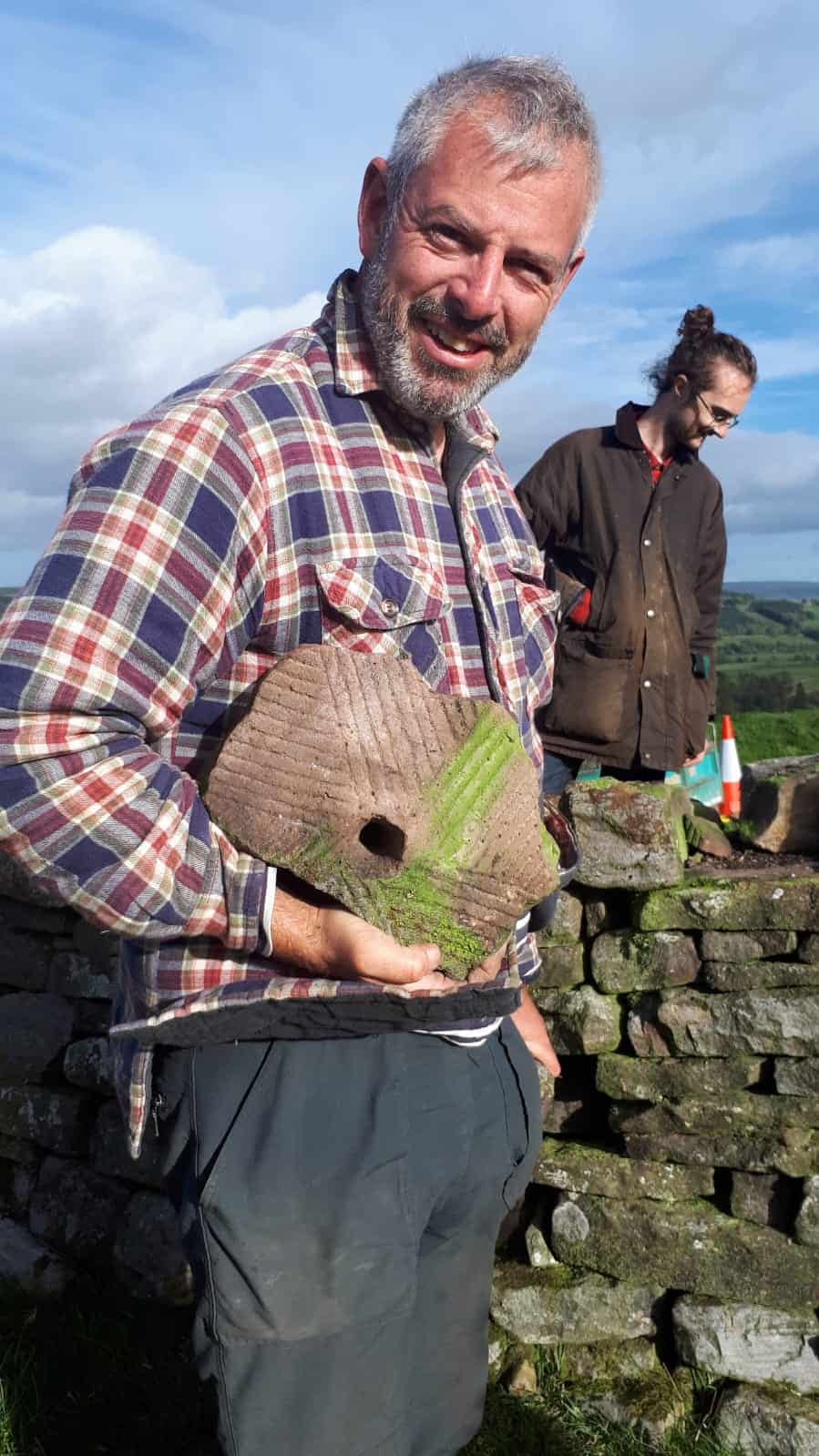
Today’s favourite find was a big quern stone — the grooves cut into it are very clear.  You can see the channels where the newly-ground flour would be pushed to the outside edge of the stone.  Early milling on a very personal scale!  Here’s Al Oswald proudly showing the quern:
If you have ever been to Epiacum, or the North Pennines, then you know about the weather.  Mist, rain, wind, and beautiful sunshine — all possible in September.  Well, we’ve had our share of all that during Operation Jericho!
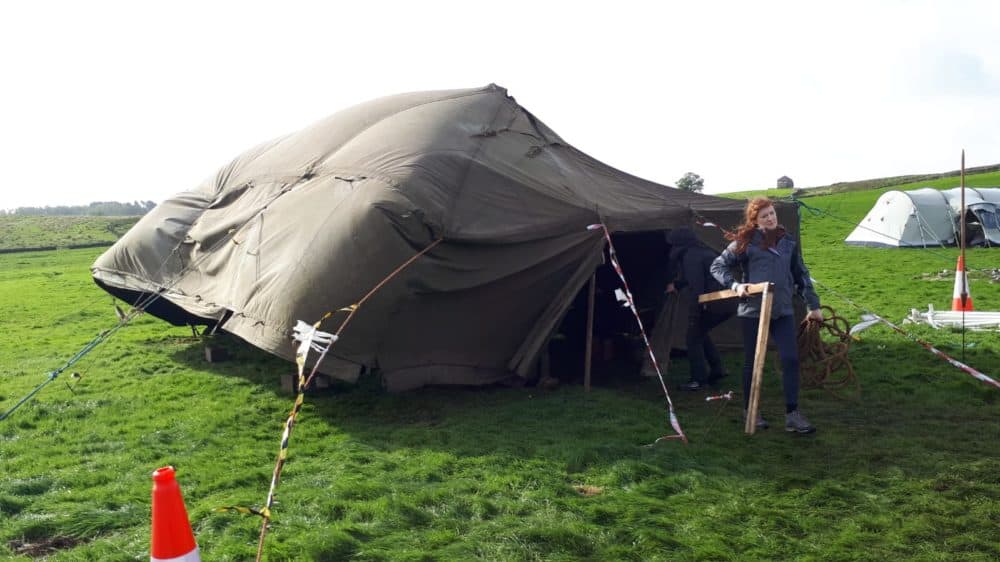
The last big tent standing — an old US Army tent (probably from M*A*S*H!), used for storing tools.  It was taken down shortly after the photo was taken to be sure it didn’t cause damage or injury.
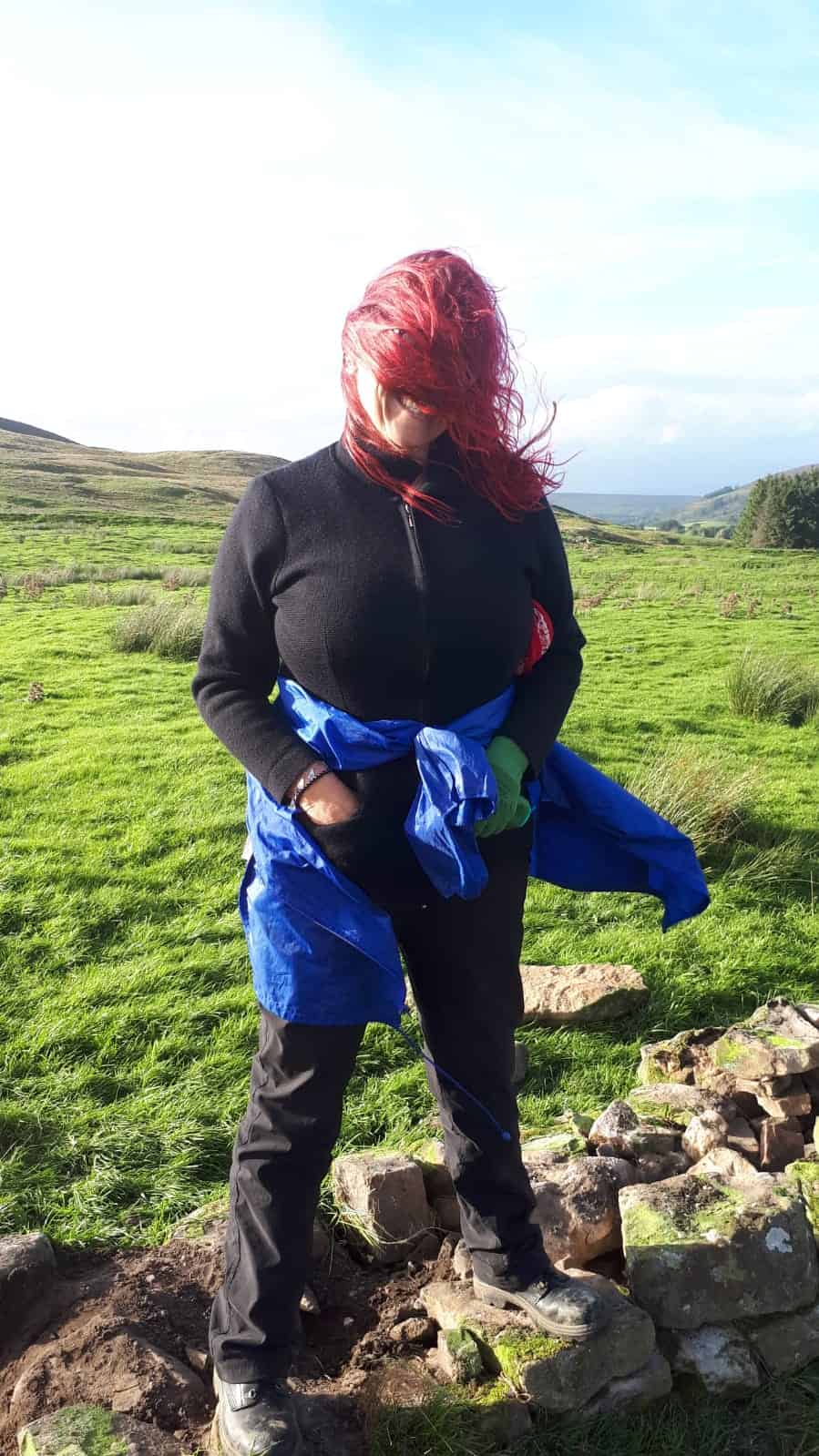
Don’t blow away, Fenella!


But for the most part, we’ve worked through it and brought the wall down…

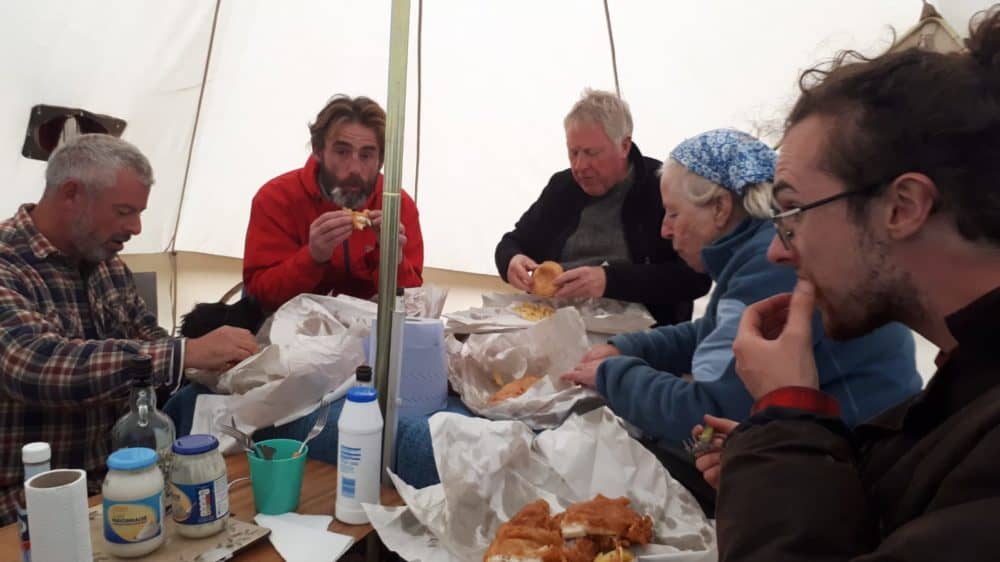
We celebrated in true British style with fish & chips!  (and mayo!  Ummm.. Okay?)
However — we got more than the usual weather, which has sadly stopped play.  Torrential downpours and ultra-high winds have destroyed the campsite and have made the ground unsafe.  Two of the big tents have actually blown away.  So sadly, the decision was made to close the fort to volunteers and visitors, in the interest of everyone’s safety.  The remaining part of the wall will be brought down by the core Epiacum team when it’s safe, so the project will be completed without any risk to the archaeology (or themselves).  Disappointing, but the job will be done and that’s the best part.

We hope to have a final Diary, giving you all the final details of just what we found and how the site looks now, so please be on the lookout for that.  Your support is what has made this project happen, and we are so grateful for you and your contributions, likes, shares, and comments.  Three sheers for the Second Nervians!
Epiacum Operation Jericho Diary #4 — The Wall Comes Down, The Wall Goes Up, The Master Returns, and Rain Stops Play Read More »

Epiacum Operation Jericho Diary #3 — The Wall Continues to Fall!

Our volunteers are amazing!  We have made great strides in getting the stones down, and the finds are coming thick and fast.  We can’t wait to show you what we’ve found!


But first, we must thank Al Oswald from the University of York for his help and archaeological oversight in the wall removal process.  He’s brought several UofY students to help  and learn, and we couldn’t be more appreciative.  The generosity of everyone associated with Operation Jericho has just been humbling.  A very heartfelt Thank You from all the Epiacum Heritage Trustees to everyone for their help!


As always, we are happy to get the word out about Epiacum via the media.  Here, Al is interviewed by the local press who are covering our demolition.


So how do all those stones get off the site?  With the help of a cart on treads, rather than wheels.  The treads spread the weight out and protect the fragile site much better than a wheeled cart would.


Progress the last two days has been exciting to see — the wall is noticeably smaller and in some places has been brought down to the footings:


We have even acquired a mascot!  Here is Chair Dave Wilkinson’s dog Sam with Dale in front of the command tent.  Sam may have spotted some wooly visitors!

Dale and Sam the camp dog

And now on to the finds.  The first one has everyone excited, as it’s a rare thing to see in Victorian-era wall fill — Roman glass!
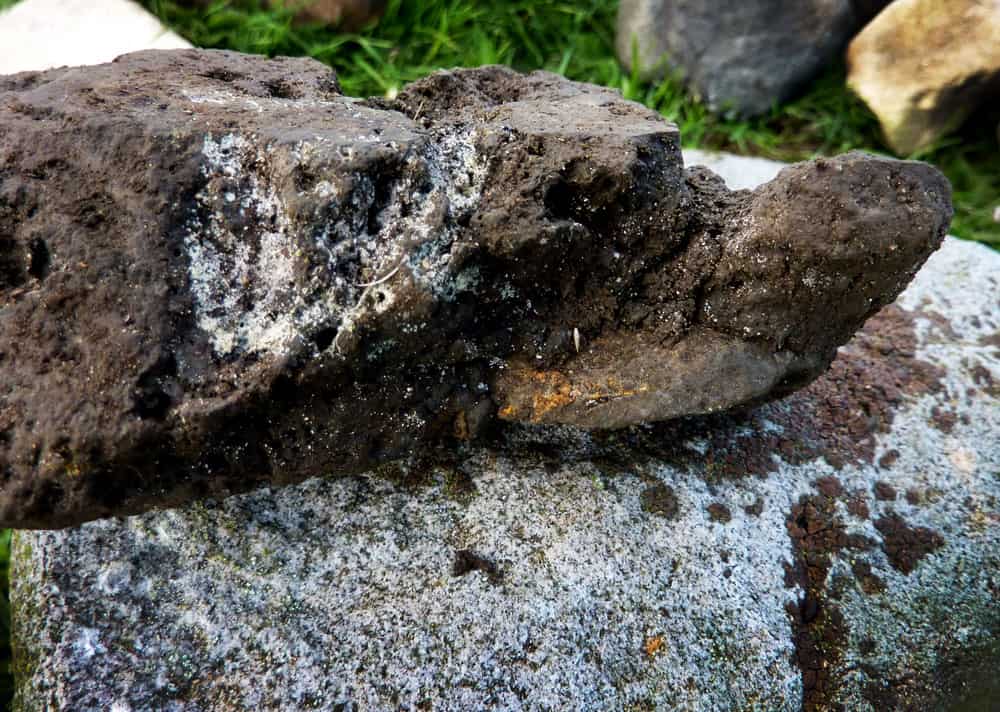
 

We have also found more interesting stones and have set them aside for expert evaluation.  The one on top is a roof tile (with a square hole), and the other is a stone plug.

Volunteers hard at work — and at play!

Tracks


Sam DID spot some wooly visitors!  He made sure they kept their distance.


As the day ends, the sky begins to darken, and it’s time for some well-earned supper.  Plus a cheery bonfire!  We’ll be back again tomorrow.

Epiacum Operation Jericho Diary #3 — The Wall Continues to Fall! Read More »

Day 4 … more wall fun…

The North Pennines weather struck again. As the nice weather of yesterday gave way to first a cold front followed by sudden and rather damp squalls, the work on the walls over and around the fort continued.

The first job was to clean up the footings left and cover the infill area with soil…

Then removing the dozens of finds for cleaning and catalouging….

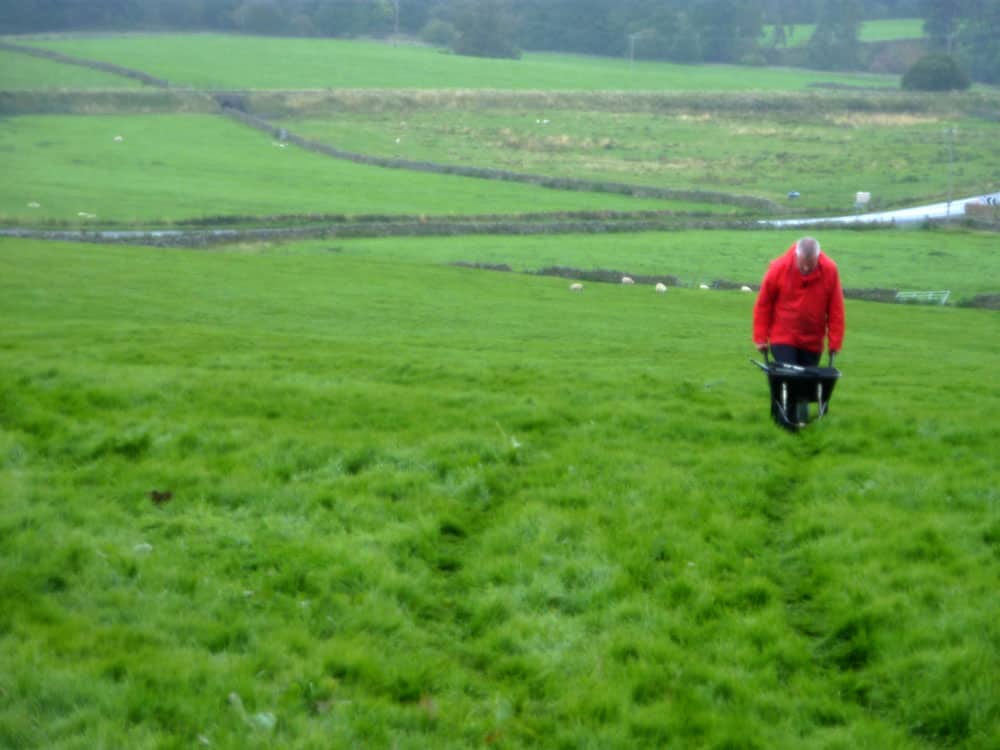
which largely entails loading them into wheel barrows and walking thing them down to the  camp and the finds tent…

Where the finds get cleaned

by a team

But not all the finds are being removed. Many of the Forts chamfered stones from the forts walls that I mentioned yesterday are being used for the footings, so that the line of the wall will still be seen…

But the wheel barrows need to be brought back, in the drizzle…


Archaeologist Al Oswald trudges back in the drizzle with a wheelbarrow for the finds…

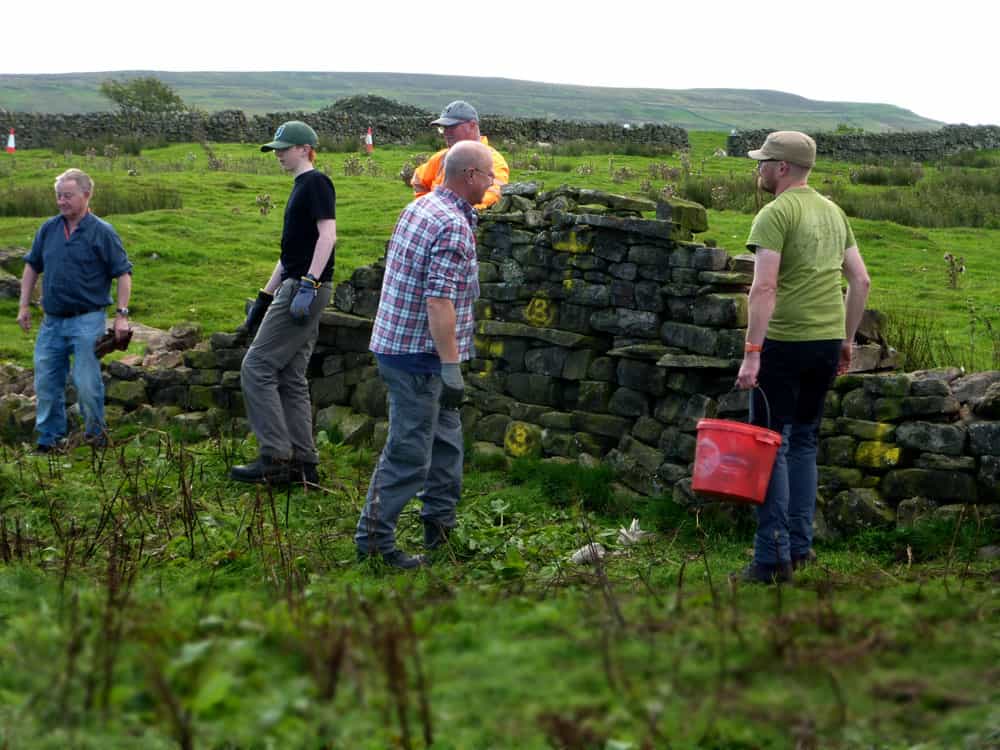
We haven’t only been deconstructing walls. Some of the perimeter walls needed repairing. So before hand they need to be dismantled and the stones laid out (As sam goes hunting) before a professional dry stone waller can put it back together and repair the breach .

Day 4 Anatomy of a Wall

Laid out like this it looks like a plastic model kit…

The fort ramparts can be seen behind.

Even here finds were made like this quarter quern stone:


Day 4 Quern Stone
Day 4 Quern Stone

Tony, (a friend and work colleague I hadn’t seen in over 30 years and who made contact as a result of this blog and rode over on his motor cycle to see the action at Epiacum like other visitors we get during the day) modelling a quern stone find from the perimeter wall…

Sam says goodnight as the troops gather around the camp fire…

More in the morrow as we start to tackle the sections in the second wall…


In this series:


Overview of the project:


Day 4 … more wall fun… Read More »

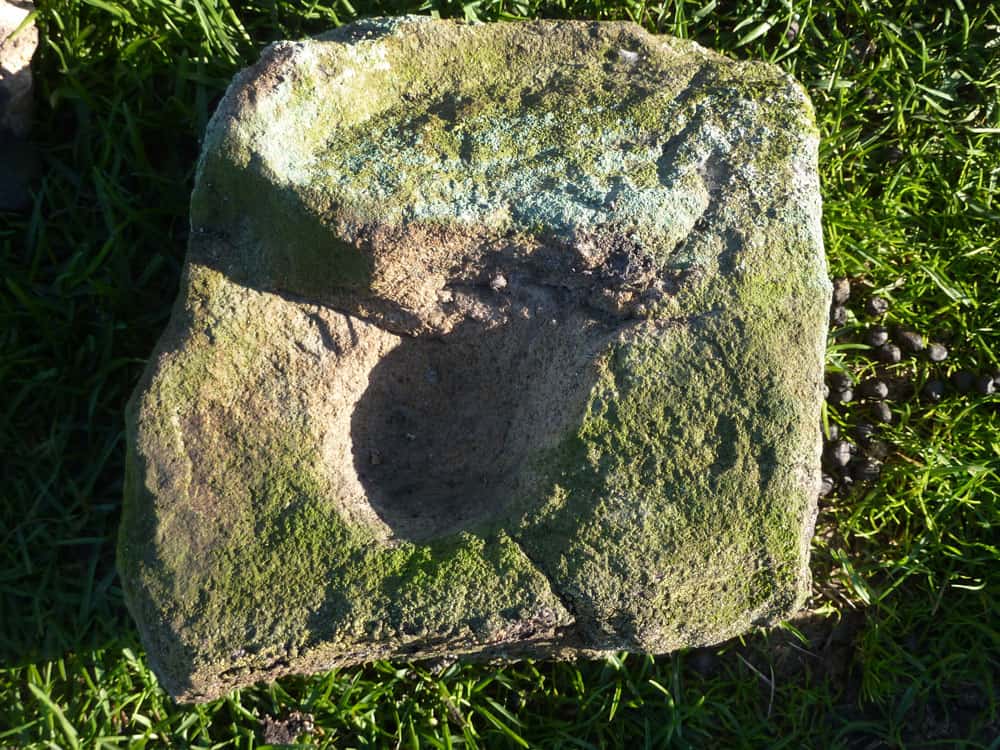
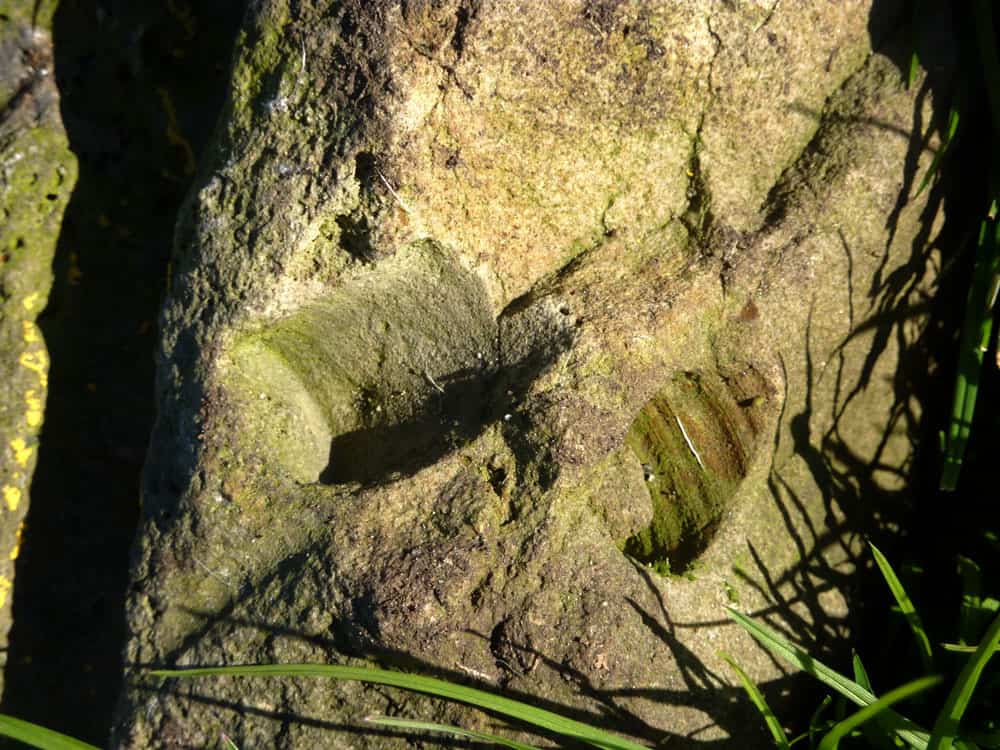
A socket or drill stone

Day 3 Finds and news about the wall…

Today was great weather. Blue skies and clear visibility, just the day for motoring on the wall deconstruction and did the team on the wall motor but more about that later. First lets have a look at some of the finds today:

First we have a range of quern stone fragments

Then we found an interesting piece of slag with something embedded in it. This is going to be sent off for analysis to see whether it is slag from lead extraction process. This is important because Epiacum is in a lead mining area. This is the first slag found on the fort and is very exciting.


Slag
Slag

The slag has something embedded in it…

Embedded

Is it from the Roman era, earlier or later?

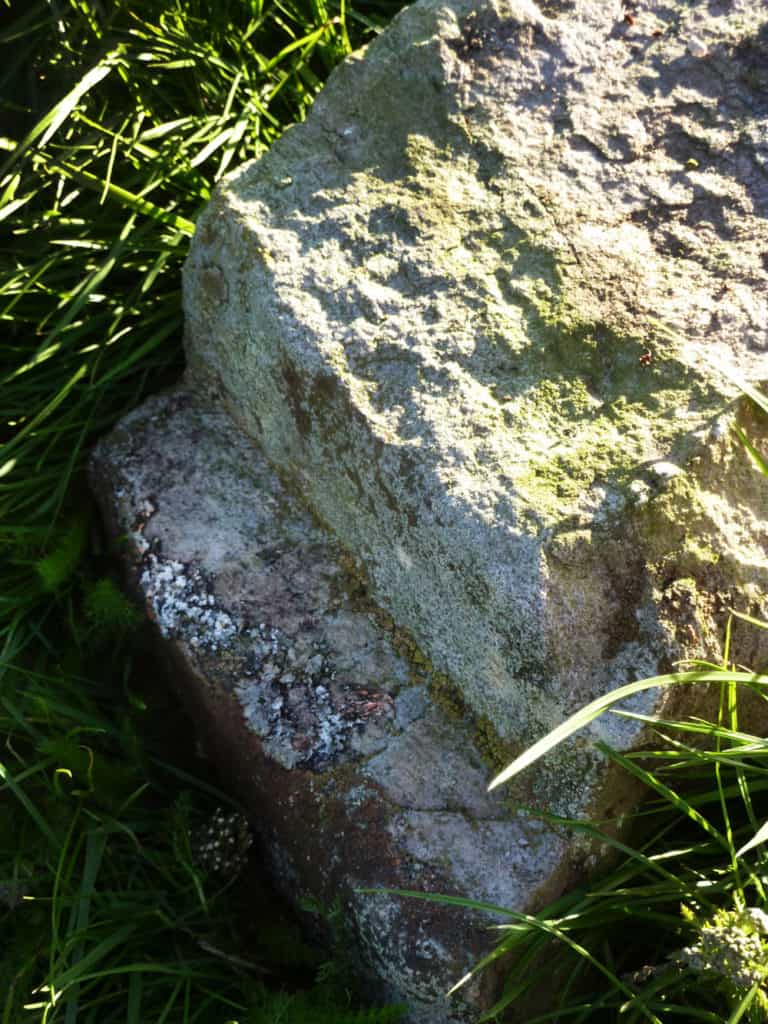
We have then found a series of architectural stones from buildings…


Door or window stone

Then this

chamfered stone – window detail?


A socket or drill stone
Practice Drill holes?

And a grind stone. I have put it in black and white and colour. See the grinding marks?


And the last part of the first wall was dismantles today. I said todays crew were motoring in the good weather…


Last part of the first wall


Tidying up
Tidying up

And all gone!

The weather is threatening to break tomorrow – more wet stuff on the way. I dropped off a big tub of dubbin for the student’s boots tonight. I think they might need it. My boots are prepared!

I am still stunned about the amount of archaeological material coming out of this wall.

That’s it for today. Bed time.

In this series:


Overview of the project:

Day 3 Finds and news about the wall… Read More »

More day two finds….

Yesterday the wall gave up more evidence of early life at Epiacum.

Becoming frequent now are the forts main building stones…

Fort Building stone

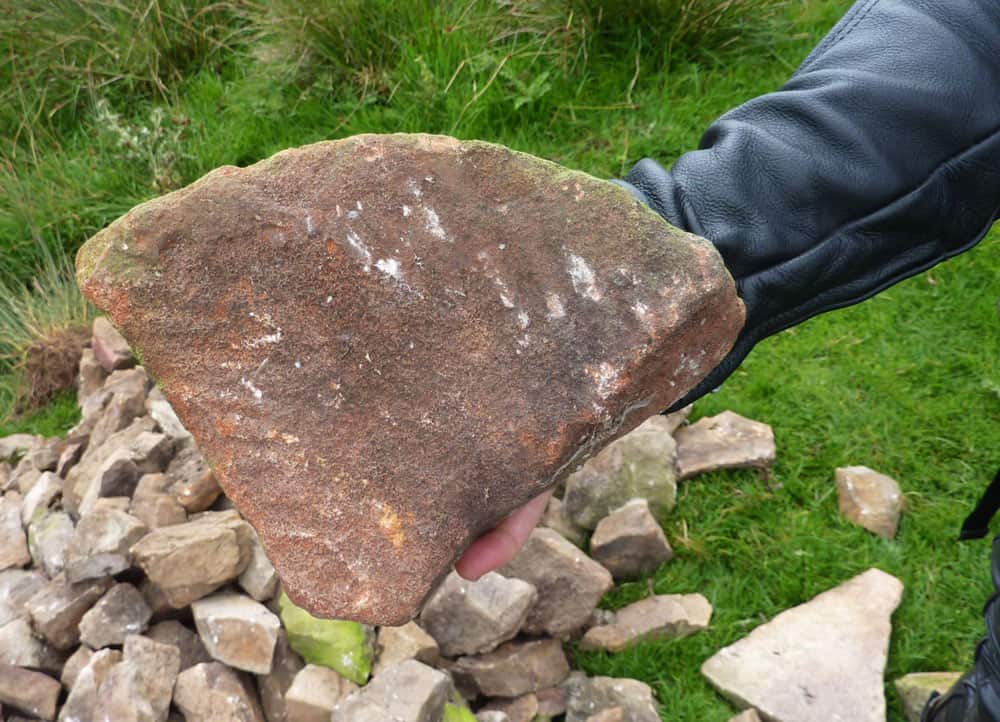
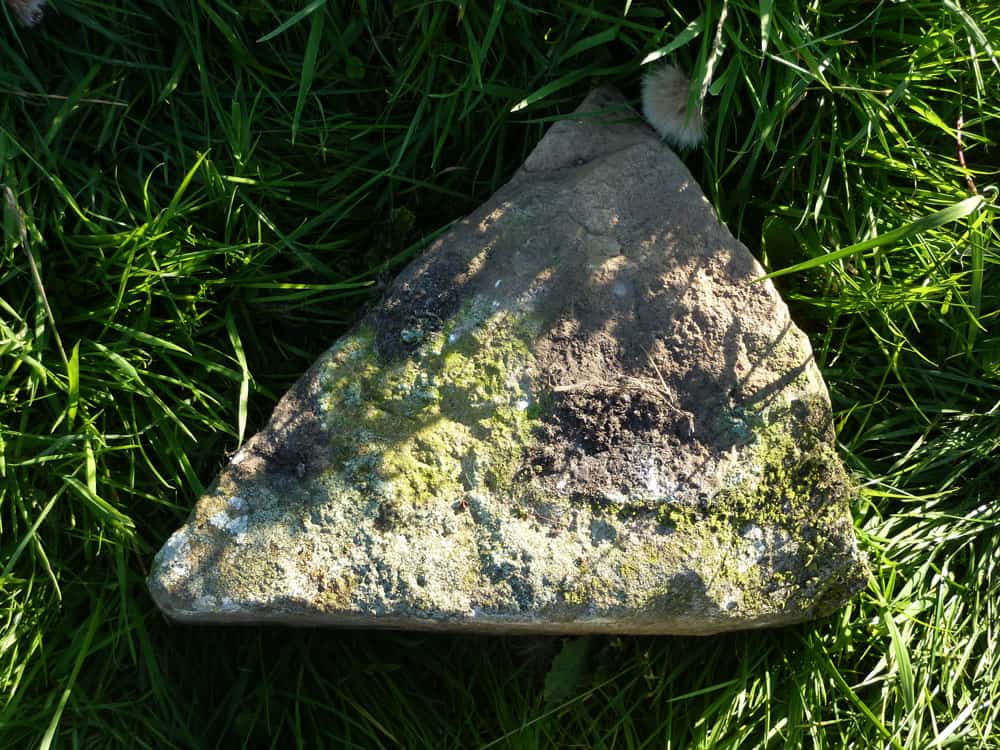
The Romans, masters of standardisation had standard shapes for the stones they used to construct forts with. All the stones in most Roman forts were this Triangular shape so that when they got to corners they would fit together nicely to male rounded corners which are stronger than sharp square corners. The face of the stone is square.

Next we are finding roman bricks…

Interestingly many of which (including sandstones) are showing blackening from burning…

This could be as they were part of an oven or hypocaust (underfloor heating). These could come from the Roman baths which have been found on the ramparts (part of the later life of the fort) or the Commandant had underfloor heating… 2,000 years ago.

An Army marches on it’s stomach and a lot of daily activity in and around any settlement in Iron Age, Roman era and Medieval times would have revolved around food.

We are finding an increasing amount of Quern Stones for grinding wheat and other gains into flour.

Two stones would be rotated with the inside faces having carved grooves…

This is a very thin small quern stone. But these…

are much bigger and sturdier.

I wonder if the drystone wall builders in Victorian times had any idea what they were using to build their walls, and just how old these items are?

It is incredible to discover so much material in one dry stone wall. The wall is beating all expectations of everyone involved in operation Jericho.

As you can see, much of the big wall has gone already

Stay tuned to see what new secrets the wall will surrender today…

DW

In this series:


Overview of the project:

More day two finds…. Read More »

Scroll to Top